Blog

  • Sinclair ZX Spectrum: The British Home Computing Icon

    Sinclair ZX Spectrum: The British Home Computing Icon

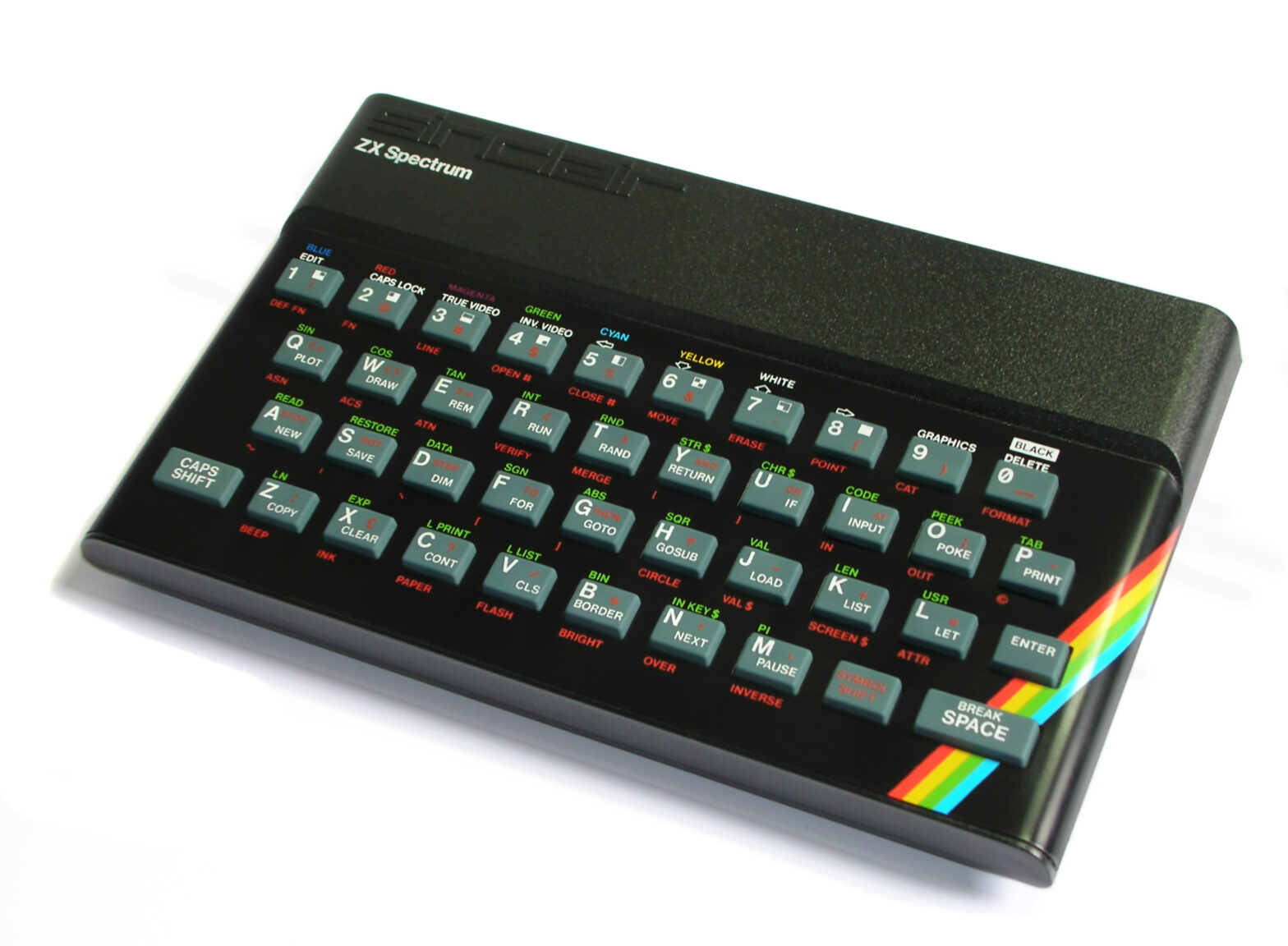
    The Sinclair ZX Spectrum was one of the most popular and influential home computers of the 1980s. Known for its affordability, vibrant 8-bit graphics, and extensive library of games, the ZX Spectrum helped ignite the home computing boom in the UK. With titles like Jet Set Willy, Manic Miner, and Dizzy, it became a beloved platform for both casual gamers and hobbyist programmers.

    Hardware Specifications

    Processor: Zilog Z80A running at 3.5 MHz

    Graphics: 256×192 pixel resolution with 15 colors (using attribute clash techniques)

    Memory: 16 KB or 48 KB of RAM (depending on model)

    Storage: Cassette tapes for software loading (with speeds up to 1500 baud)

    Audio: Single-channel beeper sound (capable of generating simple tones)

    Connectivity: Expansion port for peripherals, cassette input/output, RF output to connect to a TV

    Keyboard: Rubber membrane keyboard with 40 keys

    Original Release Date: 23rd April 1982

    Discontinued: 1992

    Cost (New in 1982): £125 for the 16k version and £175 for the 48k version

    Cost (In 2024 Price): £500 for the 16k version and £700 for the 48k version

    Modifications I have performed:

    Rebuilt using modern components and replica motherboard (original CPU and ULA)

    Cost to me for computer £35.00

    Cost to me for repairs and upgrades £109.53

    Rebuilt entire machine using a modern made replica Issue 3A board with all new components apart from the CPU, ULA and ROM chips.

    Fitted replacement keyboard membrane

    [ngg src=”galleries” ids=”17″ display=”basic_thumbnail” thumbnail_crop=”0″]
  • Sega Mega Drive/Genesis: The 16-Bit Powerhouse That Shaped 90s Gaming

    Sega Mega Drive/Genesis: The 16-Bit Powerhouse That Shaped 90s Gaming

    The Sega Mega Drive (known as the Sega Genesis in North America) was Sega’s flagship 16-bit console and a key competitor to Nintendo’s Super Nintendo. With an impressive library of iconic titles like Sonic the Hedgehog, Streets of Rage, and Golden Axe, the Mega Drive became synonymous with fast-paced action, vibrant graphics, and arcade-quality gameplay at home. It was a defining console of the 16-bit era and remains a beloved system for retro gamers today.

    Hardware Specifications

    Processor: Motorola 68000 running at 7.6 MHz (main CPU), Zilog Z80 at 3.58 MHz (for sound and backward compatibility with the Master System)

    Graphics: 64 colors on-screen from a palette of 512, with a resolution of 320×224 pixels

    Memory: 64 KB of RAM, 64 KB of video RAM

    Storage: Cartridge-based games (ranging from 4 MB to 8 MB in size)

    Audio: Yamaha YM2612 FM synthesizer chip for high-quality stereo sound, capable of 6 channels of FM audio, with an additional PSG (Programmable Sound Generator)

    Connectivity: Two controller ports, expansion ports for add-ons like the Sega CD and 32X

    Video Output: Composite, RGB, and RF output

    Original Release Date: September 1990 (PAL Regions)

    Discontinued: 1999

    Cost (New in 1990): £189.99

    Cost (In 2024 Price): £440

    Modifications I have performed:

    None

    Cost to me for computer £32.00

    Cost to me for repairs and upgrades £0.00

  • ATGames Sega Mega Drive/Genesis Flashback: Retro Revival with a Modern Twist

    ATGames Sega Mega Drive/Genesis Flashback: Retro Revival with a Modern Twist

    I know strictly this is not old or collectable, but it does fit in the retro theme of this site, so that is what I am sticking with.  The ATGames Sega Mega Drive/Genesis Flashback is a modern, plug-and-play console designed to bring back the nostalgia of Sega’s iconic 16-bit era. Preloaded with classic games from the Sega Mega Drive/Genesis library, including Sonic the Hedgehog, Golden Axe, and Mortal Kombat, the Flashback offers a convenient way to relive the glory days of retro gaming. The system also supports original Genesis cartridges and controllers, adding to its appeal for collectors and longtime fans.

    Hardware Specifications

    Processor: Custom hardware designed by ATGames to emulate Sega Mega Drive/Genesis games

    Graphics: Supports up to 720p HDMI output for modern displays

    Memory: Internal storage for preloaded games

    Storage: Cartridge slot compatible with most Sega Mega Drive/Genesis games

    Audio: Stereo sound with HDMI output, though audio emulation quality has been a point of contention for some fans

    Games: 85 built-in games, including classics from the Sega Mega Drive/Genesis and Master System, with some third-party games included

    Controllers: Two wireless 2.4 GHz controllers styled after the original 6-button Genesis controllers, with support for original Genesis controllers via wired ports

    Connectivity: HDMI output, cartridge slot, two controller ports

    Original Release Date: 2017

    Discontinued: Still Current

    Cost (New in 2017): £79.99

    Cost (In 2024 Price): £95

    Modifications I Have Made:

    None

    Cost to me for computer £0.00

    Cost to me for repairs and upgrades £0.00

  • Sony PlayStation: The Console That Redefined 3D Gaming

    Sony PlayStation: The Console That Redefined 3D Gaming

    The original Sony PlayStation revolutionized the gaming industry with its focus on 3D graphics, CD-based games, and a mature, sleek design. With iconic titles such as Final Fantasy VII, Metal Gear Solid, and Gran Turismo, the PlayStation cemented Sony’s place in the gaming world and laid the foundation for its continued dominance in future generations of consoles.

    Hardware Specifications

    Processor: 32-bit RISC MIPS R3000A running at 33.9 MHz

    Graphics: Custom GPU capable of displaying up to 360,000 polygons per second, with resolutions up to 640×480 pixels

    Memory: 2 MB of RAM, 1 MB of VRAM

    Storage: CD-ROM drive (dual-speed) supporting up to 700 MB per disc

    Audio: 24 channels of ADPCM sound with CD-quality audio

    Controllers: Originally shipped with a simple digital controller, later models included the DualShock controller with dual analog sticks and vibration feedback

    Connectivity: Two controller ports, two memory card slots, serial I/O port, AV multi-output for composite, S-video, and RGB connections

    Original Release Date: 29th September 1995

    Discontinued: 23rd March 2006

    Cost (New in 1995): £299

    Cost (In 2024 Price): £550

    Modifications I have performed:

    Cleaned the inside of the eject button as it was sticking in the “open”  position when pressed down.

    Cost to me for computer £64.00

    Cost to me for repairs and upgrades £10.00 (for Sony PlayStation mouse and mat)

    [ngg src=”galleries” ids=”18″ display=”basic_thumbnail” thumbnail_crop=”0″]
  • Nintendo Entertainment System (NES): The Console That Saved Gaming

    Nintendo Entertainment System (NES): The Console That Saved Gaming

    The Nintendo Entertainment System (NES) is often credited with revitalizing the video game industry after the crash of 1983. With classic games like Super Mario Bros., The Legend of Zelda, and Metroid, the NES introduced millions to the world of gaming, establishing Nintendo as a dominant force in the industry. Its influence can still be seen in modern gaming, with many franchises born on the NES continuing today.

    Hardware Specifications

    Processor: 8-bit Ricoh 2A03 (based on the MOS 6502) running at 1.79 MHz (PAL version at 1.66 MHz)

    Graphics: PPU (Picture Processing Unit) capable of displaying 48 colors and 5 grays, with a resolution of 256×240 pixels

    Memory: 2 KB of RAM, 2 KB of video RAM

    Storage: Cartridge-based games (from 8 KB to 1 MB in size)

    Audio: 5-channel sound with 2 pulse wave channels, 1 triangle wave, 1 noise channel, and 1 DPCM channel

    Connectivity: Two controller ports, expansion port for peripherals, RF and composite video output

    Controllers: The NES introduced the now-standard D-pad controller, with two face buttons (A, B) and Select/Start buttons

    Original UK Release Date: 1st September 1986

    Discontinued: 14th August 1995 in USA and 25th September 2003 in Japan

    Cost (New in 1986): from £79.99 (depending on accessories included with system)

    Cost (In 2024 Price): from £240 (depending on accessories included with system)

    Modifications I have performed:

    General clean inside

    Replaced 72pin connector for cartridge connection

    Cost to me for computer £54.99

    Cost to me for repairs and upgrades £34.45

  • Apple Mac Mini: Compact Power in a Small Package

    Apple Mac Mini: Compact Power in a Small Package

    The Apple Mac Mini was Apple’s entry-level, ultra-compact desktop computer, offering an affordable option for users looking to experience the macOS ecosystem. With its sleek, minimalist design and a focus on convenience, the Mac Mini quickly became popular for home users and small businesses alike. Its small size, versatility, and quiet operation made it a great choice for those looking for a no-fuss desktop experience.

    Hardware Specifications (2005 Model)

    Processor: 1.25 GHz or 1.42 GHz PowerPC G4

    Graphics: ATI Radeon 9200 with 32 MB of DDR SDRAM

    Memory: 256 MB of DDR SDRAM (expandable to 1 GB)

    Storage: 40 GB or 80 GB 5400 RPM IDE hard drive

    Optical Drive: Slot-loading Combo drive (CD-RW/DVD-ROM)

    Audio: Integrated speaker, analog and digital audio out

    Connectivity: 10/100 BASE-T Ethernet, FireWire 400, two USB 2.0 ports, DVI and VGA video output

    Operating System: Mac OS X Panther (upgradable to Mac OS X Tiger)

    Original Release Date: 2005

    Discontinued: 2014

    Cost (New in 2005): £339 (Base Model)

    Cost (In 2024 Price): £560 (Base Model)

    Modifications I Have Made:

    Flashed EFI BIOS from macmini1,1 to macmini2,1

    Upgraded CPU from 32bit Intel Core Duo 1.83GHz to 64bit Intel Core 2 Due 2.0GHz

    Upgraded RAM from 512MB to 3GB

    Installed modified version of Mavericks 10.9.5 (previous highest OS was Snow Leopard 10.6.8)

    Cost to me for computer £0.00

    Cost to me for repairs and upgrades £0.00

  • Apple Power Mac G4: The Tower of Creative Power

    Apple Power Mac G4: The Tower of Creative Power

    The Apple Power Mac G4 was a revolutionary desktop computer designed for professionals in creative industries like video editing, graphic design, and music production. Known for its sleek, futuristic design and powerful processing capabilities, the Power Mac G4 earned the nickname “supercomputer” due to its ability to perform over 1 billion floating-point operations per second (GFLOPS). This machine became a favourite among artists and professionals, powering a generation of creative work.

    Hardware Specifications (1999 Model)

    Processor: PowerPC G4, running at 350 MHz, 400 MHz, or 450 MHz (depending on configuration)

    Graphics: ATI Rage 128 with 16 MB of SDRAM (upgradeable to better options)

    Memory: 64 MB to 1 GB of PC100 SDRAM

    Storage: 10 GB, 20 GB, or 40 GB Ultra ATA hard drive

    Optical Drive: CD-ROM, DVD-ROM, or DVD-RAM options

    Audio: Stereo 16-bit audio, built-in speaker, microphone input

    Connectivity: 10/100 BASE-T Ethernet, two USB 1.1 ports, two FireWire 400 ports, VGA output, and audio in/out

    Operating System: Mac OS 8.6 (upgradable to Mac OS X 10.4 Tiger)

    Original Release Date: August 1999

    Discontinued: June 2004

    Cost (New in 1999): £1299

    Cost (In 2024 Price): £2300

    Modifications I have performed:

    Fitted RAM and Hard Drive as system did not have any fitted

    Cost to me for computer £20.00

    Cost to me for repairs and upgrades £0.00

  • Game Boy Micro: The Pocket-Sized Powerhouse

    Game Boy Micro: The Pocket-Sized Powerhouse

    The Game Boy Micro was the last and smallest iteration of the Game Boy line. Despite its tiny size, this ultra-portable handheld packed the full power of the Game Boy Advance into a sleek, modern design, offering bright, crisp visuals and customizable faceplates. While it lacked backward compatibility with original Game Boy and Game Boy Colour games, its portability, vibrant screen, and unique design earned it a loyal fanbase.

    Hardware Specifications

    Processor: 32-bit ARM7TDMI (same as the Game Boy Advance) running at 16.8 MHz

    Screen: 2-inch backlit LCD with a resolution of 240×160 pixels

    Memory: 256 KB of RAM, 96 KB of VRAM

    Storage: Cartridge-based (compatible with Game Boy Advance games only)

    Audio: Stereo sound, headphone jack included (which was a notable feature missing in later DS models)

    Battery: Rechargeable lithium-ion battery, offering up to 10 hours of gameplay

    Dimensions: 50 x 101 x 17.2 mm, weighing just 80g

    Customization: Interchangeable faceplates allowed for personalization

    Original Release Date: 4th November 2005

    Discontinued: 2008

    Cost (New in 2005): £69.99

    Cost (In 2024 Price): £110

    Modifications I have performed:

    None

    Cost to me for computer £0.00

    Cost to me for repairs and upgrades £0.00

  • Acorn Electron: The Affordable Entry into 80s British Computing

    Acorn Electron: The Affordable Entry into 80s British Computing

    The Acorn Electron was designed as a budget-friendly alternative to the popular BBC Micro. While it shared many features with its more powerful sibling, the Electron was aimed at home users and families looking for an affordable way to explore computing and programming. Despite some hardware limitations and initial supply shortages, the Electron developed a strong following, especially among hobbyists and programmers of the 1980s.

    Hardware Specifications

    Processor: 8-bit MOS Technology 6502A running at 2 MHz

    Graphics: Up to 160×256 pixels with 16 colors or 320×256 pixels with 4 colors

    Memory: 32 KB of RAM

    Storage: Cassette tapes (via standard cassette player), expandable with floppy disk add-ons

    Audio: Single-channel sound

    Operating System: Acorn MOS, similar to the BBC Micro’s OS

    Connectivity: Edge connector for expansions, cassette interface for loading software, RF video output to connect to a TV

    Original Release Date: 25th August 1983

    Discontinued: 1985

    Cost (New in 1983): £199

    Cost (In 2024 Price): £630

    Modifications I have performed:

    None

    Cost to me for computer £50.99

    Cost to me for repairs and upgrades £0.00

  • Nintendo DS Lite: Sleek Redesign of a Handheld Classic

    Nintendo DS Lite: Sleek Redesign of a Handheld Classic

    The Nintendo DS Lite was a streamlined, more stylish version of the original Nintendo DS. Featuring brighter screens, a slimmer design, and better battery life, the DS Lite quickly became one of the most popular handheld consoles of its era. Maintaining full compatibility with both DS and Game Boy Advance games, it appealed to a wide audience, from casual gamers to long-time Nintendo fans.

    Hardware Specifications

    Processor: Dual ARM processors (ARM946E-S at 67 MHz and ARM7TDMI at 33 MHz)

    Graphics: Dual 3-inch LCD screens, with the bottom screen featuring touch input (both screens at 256×192 pixel resolution)

    Memory: 4 MB of RAM

    Storage: Game cartridges for DS games, backward compatible with Game Boy Advance cartridges

    Audio: Stereo sound with a headphone jack and built-in microphone

    Battery: Rechargeable lithium-ion battery, offering up to 19 hours of gameplay on a single charge

    Dimensions: 133 x 73.9 x 21.5 mm, weighing 218g

    Connectivity: Wi-Fi for local wireless multiplayer and online features

    Original Release Date: 23rd June 2006

    Discontinued: 2014

    Cost (New in 2005): £99.99

    Cost (In 2024 Price): £150

    Modifications I have performed:

    None

    Cost to me for computer £0.00

    Cost to me for repairs and upgrades £0.00